

Showing Up Matters: Civic Engagement, Mental Health, and the Power of Care
Showing Up Matters: Civic Engagement, Mental Health, and the Power of Care
By Iridane Sanchez
I’ve worked in civic engagement for over a decade, but it wasn’t until recently that I truly understood how powerful and expansive it really is. The truth is, civic engagement is every moment we choose to show up for our communities, every relationship we invest in, every act of care or courage that makes our world a little better. It’s not reserved for experts, activists, or “political” people, it’s something each of us is already capable of, and often already doing without even realizing it. Once you see that, you begin to understand just how powerful you truly are.
At its core, civic engagement is individuals and groups taking action to improve their communities through political and non-political activities. And those two distinctions matter and I want to highlight:
First, individuals are just as powerful as groups. If you’ve ever felt like you’re “just one person,” don’t let that stop you. Change often begins with one person noticing a need, like seeing trash on your usual dog-walking route, and one person deciding to act. Maybe you organize a neighborhood cleanup, or maybe you simply bring a bag and gloves with you next time and pick up what you can. Either way, you’re engaging. You’re making your community better, and you might inspire someone else along the way.
Second, civic engagement includes both political and non-political actions. Political actions certainly include voting, but not everyone can vote due to age, immigration status, or prior incarceration. And yet, policy impacts all of us. When we treat voting as the only path to civic participation, we unintentionally exclude people who are often the most affected. But even if you can’t vote, you still have powerful tools: encouraging eligible loved ones to register and vote, attending rallies or protests, contacting your elected officials (because whether you voted for them or not, they still represent you), or submitting public comments on legislation that will shape your daily life.
Non-political actions are equally important, volunteering your time, joining a community project, checking in on a neighbor, or starting a club, team, or mutual aid effort. These actions strengthen the social fabric that makes civic life possible. They remind us that civic engagement isn’t always loud or formal; sometimes it’s as simple as being there for someone when they need support. Calling a friend to see if they need groceries after losing a job? That’s civic engagement. Signing a petition to protect a place you care about? Civic engagement.
What civic engagement does not require is specialized knowledge, a degree in policy, or a title that signals you’re a “political person.” Too often, civic work feels like an exclusive club reserved for specialists. But here’s the truth: your lived experience is expertise. The issues that move you, affect you, or frustrate you are exactly where your voice and action matter most. Civic engagement is simply an invitation to participate, not perfectly, not professionally, but authentically.
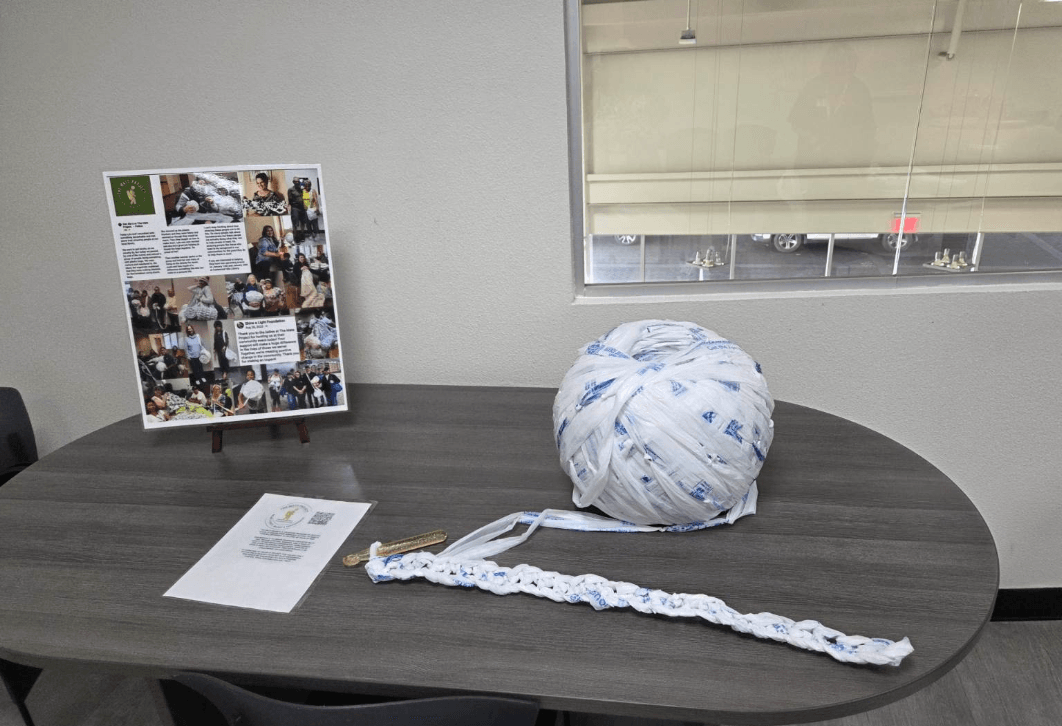
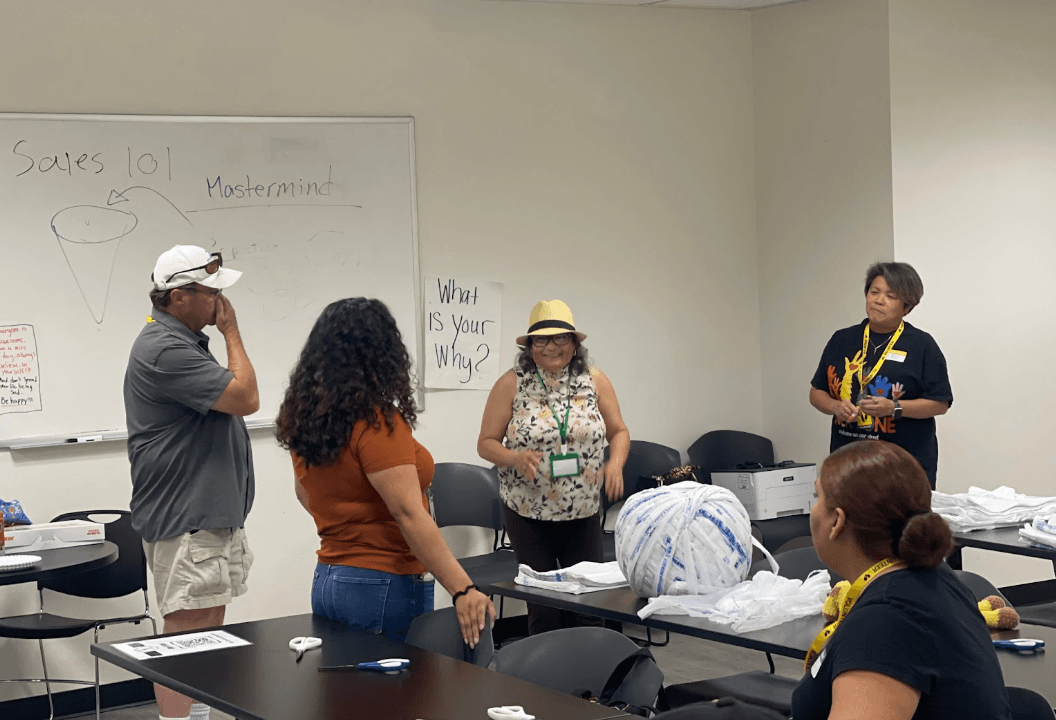
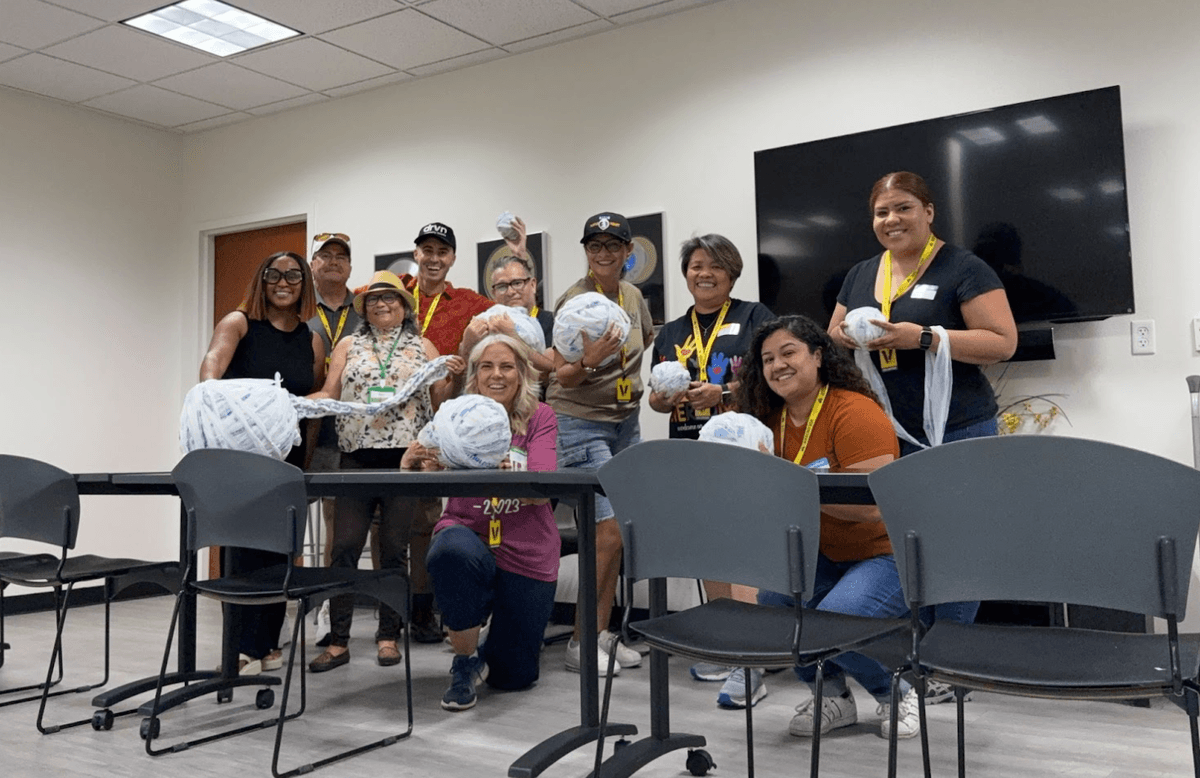
Relationships are the beating heart of civic life. When we build trust, show up for each other, and root our connections in care, we create pathways for action. Years ago, I used to volunteer to feed unhoused individuals with my mom and ladies from our church. After my mom got sick, I stopped. However, because of my mom’s example, I’ve always felt a calling to serve my community through direct action. This year, during Poderistas’ Weekend of Action I had the opportunity to volunteer with The Mats Project. They take upcycled plastic bags, turn them into plastic yarn, and crochet them into bed mats for unhoused individuals. I’m particularly fond of that volunteer action, because it was one I took with a friend who came out to volunteer with me.
After volunteering with The Mats Project, I’ve continued to develop a relationship with Ms. Merri who runs the organization and I’m excited to continue supporting them beyond my time as a Power Squad Leader.
So the next time an issue matters to you, don’t keep it to yourself. Call or text your friends. Share why you care and invite them to learn more or join you. They may have never heard about it otherwise, and because they trust you, your invitation may be the spark they need to take action. If they go on to engage in something that matters deeply to them, even better!
You’ve likely been practicing relational organizing for years without realizing it. That’s the beauty of civic engagement: it isn’t something you suddenly decide to start doing, it’s something woven into your everyday life, something you recognize you’ve been capable of all along. Civic engagement is a lifestyle, a way of moving through the world with awareness and a belief that your actions matter. And they do.
About Iridane Sanchez
Iridane Sanchez is a Multipassionate Creative & Community Builder. She’s also a Recipient of the 2025 prestigious civic Power Squad Leaders fellowship program powered by Poderistas.
Power the NAPRHSW Network: Support the development of students and professionals in social work and allied human services across the Latino diaspora. Becoming a member strengthens the field—powering a professional network, expanding skills through targeted development, and driving community action and systems change. Learn more at www.naprhsw.com